Get the Military Insider Newsletter
Give me more benefit content and other military content to my inbox.

For active duty service members and veterans, VA loans can make homeownership more affordable and accessible. VA loans have unique benefits, like no down payment, no private mortgage insurance (PMI), and oftentimes, lower interest rates. Most military borrowers pay a VA loan funding fee, but you can roll that cost into your monthly mortgage payments.
If you’re thinking about purchasing a home with a VA loan, using a VA loan calculator is a good first step. Military.com’s VA loan calculator has many helpful features that other mortgage calculators don’t include, such as:
Military.com’s VA loan calculator allows you to test various “what-if” scenarios, so you can see how factors like your down payment size and loan term might impact your monthly payments. The calculator can also help you compare loan options, which will help you make the best financial decision for your situation.
Our VA loan calculator makes it easy to find out how much home you can afford, and what your monthly mortgage payments might cost. Here’s a step-by-step look at how to use Military.com’s VA loan calculator tool:
Once you populate the calculator with these figures, it will automatically calculate your monthly payment breakdown. You’ll see your VA funding fee, total loan amount, total interest paid, and the total of all payments made over the life of the loan.
Like conventional loans, many different factors can affect your VA loan payment. Here are some of the most important ones to understand the differences between a va loan vs a conventional loan.
Home value is the potential purchase price of the home. It doesn’t include your down payment. The value of the home has a big impact on the loan size, especially if you’re planning to put 0% down. The more you have to borrow, the higher your VA loan payment will be.
Your down payment is the amount you pay upfront towards your loan principal. In a VA loan calculator, the down payment can be expressed as a dollar amount or a percentage of the purchase price. VA loans don’t require a down payment, which makes them attractive compared to conventional loans. However, putting money down can reduce the VA funding fee and your monthly loan payment.
A mortgage interest rate is the percentage a lender charges you to borrow money to purchase a home. It’s expressed as a yearly percentage. Mortgage interest rates depend on your credit score, loan type, loan term, down payment amount, and market conditions.
VA loans with higher interest rates will have higher monthly payments, whereas lower interest rates yield lower monthly payments and less interest paid over time. Mortgage interest rates depend on your credit score, loan type, loan term, down payment amount, and market conditions. Most VA loan calculators use national average interest rates, but your actual interest rate can vary.
The loan term is the amount of time you’ll be making payments until the loan is paid off. Most VA loans have a 15- or 30-year term. Your chosen loan term can have a big impact on the cost of your loan. Shorter loan terms have higher monthly payments, but you’ll pay less interest. Longer loan terms have lower monthly payments, but you’ll pay more interest over the life of the loan.
Property taxes are taxes you pay to your local government for owning a home. These taxes are calculated based on the value of your home and the local tax rate. They can vary significantly based on location, and they can also fluctuate year-to-year. Typically, the higher your property taxes are, the higher your mortgage payments will be.
If you don’t know the exact property taxes for a home you’re thinking about buying, you can contact the city or town clerk. You can also find state and county property taxes online from TaxFoundation.org, but remember that each property has a unique tax assessment.
Homeowners insurance covers the structure of your home and your personal items that get damaged or destroyed in a covered event, like a wildfire, hurricane, or windstorm. While home insurance isn’t legally required, it’s typically required by VA lenders when you get a mortgage.
The average cost of home insurance was $3,303 per year in 2024, according to data from the Consumer Federation of America (CFA). However, home insurance premiums depend on many different factors, like your city and ZIP code, size and age of the home, value of the home, past claims history, coverage limits, and deductibles.
Most VA borrowers pay a funding fee, which is a one-time fee that supports the VA home loan program. Specifically, the fee allows the VA to offer loans with no down payment and no PMI. The fee can be paid upfront or rolled into the loan amount.
The VA loan funding fee is expressed as a percentage of the total loan amount. The percentage varies based on the following:
One of the biggest factors that affects the funding fee is how many times you’ve used a VA loan in the past. Here are the VA loan funding fees for a VA purchase loan, based on the number of uses and the down payment amount:
Number of uses | Down payment amount | VA loan funding fee |
First use | Less than 5% | 2.15% |
5% or more | 1.5% | |
10% or more | 1.25% | |
Subsequent uses | Less than 5% | 3.3% |
5% or more | 1.5% | |
10% or more | 1.25% |
Another thing that determines the VA loan funding fee is the type of VA loan you get. In the table below, you can see the VA loan funding fee for several other VA home loans:
Loan type | VA loan funding fee |
VA cash-out refinancing loan | 2.15% first use; 3.3% subsequent use |
Native American Direct Loan (NADL) | 1.25% purchase; 0.5% refinance |
Interest Rate Reduction Refinancing Loan (IRRRL) | 0.5% |
Manufactured home loan | 1% |
VA loan assumption | 0.5% |
Vendee loan (for buying VA-acquired property | 2.25% |
While most VA borrowers pay a funding fee, not everyone does. The VA loan funding fee can be waived for the following people:
The cost of a VA loan depends on lots of different variables, including:
In general, VA loans cost less than conventional mortgages, even with the funding fee, and have lower closing costs than conventional loans. Many VA lenders offer competitive interest rates, which can keep your monthly payments low. Plus, VA loans don’t require PMI, which can cost anywhere from 0.2% to 2% of your loan amount each year. As a result, VA loans usually have lower monthly and lifetime costs than other types of home loans.
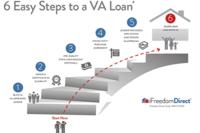
The VA loan process is pretty simple. Here’s a look at how to get a VA loan to buy a home.
No, VA loans never require PMI regardless of your down payment size. Conventional mortgages usually require PMI if you put less than 20% down, so VA loans can help you save a significant amount on your monthly and lifetime loan costs.
Yes, eligible borrowers can get a VA loan with 0% down payment. Typically, there is no down payment requirement for borrowers who have full entitlement. However, if you’ve used a VA loan in the past and have limited entitlement remaining, a down payment is required.
The VA funding fee is calculated based on several factors, including whether you’ve used a VA loan in the past, your down payment amount, your military status, and the type of loan. For a VA purchase loan, the VA funding fee ranges from 1.25% to 3.3% of the total loan amount.
Yes, most disabled veterans don’t have to pay a VA funding fee. This includes veterans who receive VA disability compensation for a service-connected disability, as well as disabled veterans who receive retirement pay instead. Surviving spouses who receive DIC can also have the funding fee waived.
Yes, borrowers can finance the VA funding fee. If you choose this option, the funding fee gets rolled into your total loan amount, so it will increase your monthly payment. You can also pay the funding fee upfront in a lump sum.
In general, VA loan rates are lower than conventional mortgage rates. The VA guarantees a portion of the loan, which lowers the risk for the lender and allows them to offer better interest rates. However, VA loan rates still vary based on individual factors.
Military.com’s VA loan calculator can give you a very accurate look at monthly mortgage payments. Unlike other calculators, ours accounts for the VA funding fee, VA disability exemptions, and whether the VA funding fee is paid upfront or rolled into the loan. However, no online VA loan calculator is 100% accurate.
Military borrowers who are eligible for a VA loan can take advantage of unique benefits, like no down payment, no PMI, and more competitive interest rates. Using Military.com’s VA loan calculator can give you a better idea of what you might pay for a loan, based on the purchase price, VA funding fee, and other things.
However, mortgage costs depend on many criteria, and an online calculator can only estimate how much you might pay to purchase a home. For a more precise estimate, it’s a good idea to talk to a VA loan advisor. They'll help you compare loan options and offer support every step of the way, from applying to closing.

Give me more benefit content and other military content to my inbox.