


On a gym floor in Los Angeles, a group of veterans stood in a circle, exhausted from a workout, unsure what to expect next.
There was no therapist. No formal program. No script.
Then someone started talking.
When Military.com sat down with Nate Boyer, he described how it all began.
“That first time… we just worked out, grabbed tacos, and naturally started opening up,” he said.
What began as an informal gathering would become Merging Vets & Players (MVP), a growing national movement built on a simple idea: when the uniform comes off, what people lose most isn’t structure, it’s the team.
A Different Narrative About Veterans
For years, the dominant narrative around veterans has focused on trauma, brokenness and struggle. Boyer doesn’t dismiss those realities, but he challenges the idea that they define the community.
“Whether it’s PTSD or brokenness… those are all human issues. Those aren’t just veteran issues,” he said.
That distinction matters. Because when veterans are repeatedly framed as damaged, it doesn’t just shape public perception; it shapes how they see themselves.
“Somebody tells you, and you start to fall into that trap… maybe I am less than… maybe I don’t belong. And that’s dangerous. It’s not true,” Boyer said.
Instead, the focus shifts to something deeper: identity.

What Happens When the Uniform Comes Off
Boyer has lived that transition more than once.
A former Green Beret, he later signed with the Seattle Seahawks as a long snapper after playing college football at Texas. In a short span of time, he experienced the loss of two identity-defining roles.
What he found was a shared struggle between veterans and professional athletes.
“There’s a lot of similarities with the way you approach things… that’s very similar to the athlete experience and the veteran experience,” he said.
Both groups operate in high-performance environments built around structure, sacrifice and teamwork. And when that structure disappears, something critical goes with it.
“When it’s over, you’ve got to dump that way of thinking,” Boyer said. “And that’s hard.”
From Workout to ‘Huddle’
MVP didn’t begin as a formal organization. It started with a workout.
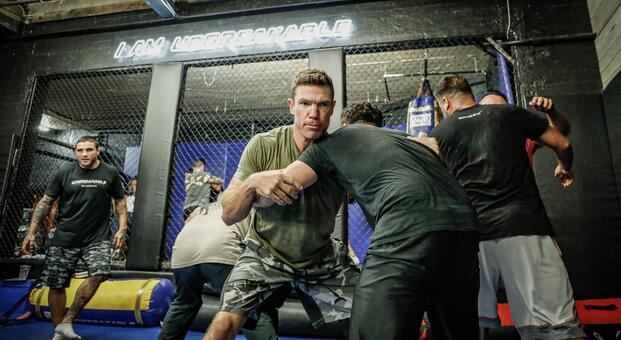
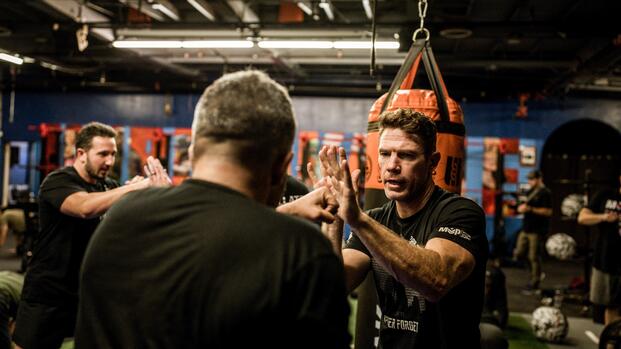
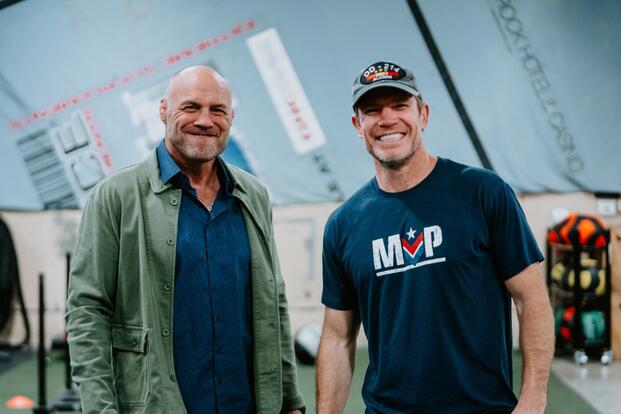
In 2015, Boyer and co-founder Jay Glazer began bringing veterans and former professional athletes together in a gym. The concept was simple: train together and see what happens.
What happened next became the foundation of the program.
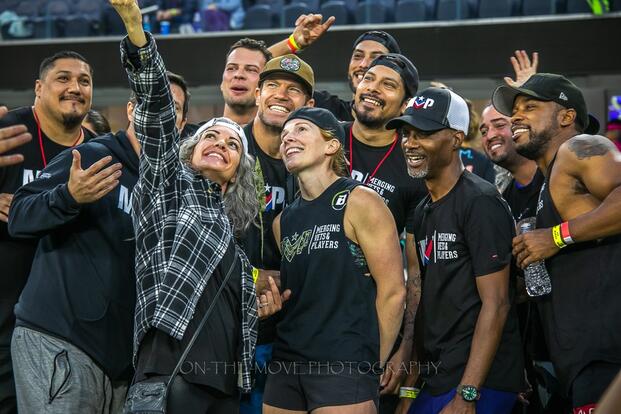
After the workout, the group formed a circle: what MVP now calls a “huddle.”
“We were exhausted… and people just felt compelled to share a little bit,” Boyer said.
There was no clinician leading the discussion. No structured therapy model. Just people speaking honestly about where they were and others responding with their lived experience.
“Somebody would say, ‘I experienced something similar… this is how I’m dealing with it,’” he said.
The model stuck: shared physical struggle followed by open conversation.
Why Team Matters More Than Treatment
At its core, MVP is built around connection.
Participants don’t show up to be fixed. They show up to belong.
“Sometimes they’re almost visibly shaking… because they don’t feel like they belong,” Boyer said.
That begins to change quickly.
“Everybody’s messed up in some way… because life is hard,” he said.
That realization, shared, not prescribed, breaks down isolation.
Over time, the transformation becomes visible.
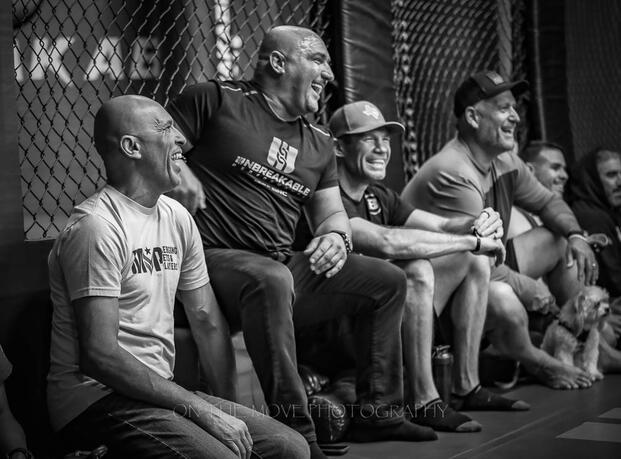
“They’re not trying to hide anymore… they’re smiling,” Boyer said.
What Success Looks Like
Since its founding, MVP has grown into a national network serving more than 15,000 participants across multiple cities, delivering over 20,000 program hours through its unique model of workouts and peer-to-peer “huddles.”
According to Lisa Parmeter, Executive Director of MVP, the impact shows up both in data and in daily interaction. “We do an intake survey… and then ongoing surveys, so we see the progression over time,” she said.
The results are notable:
- 92% of members are retained annually
- 95% report high satisfaction with the program
- 90% attend four or more sessions
- 90% report strong satisfaction with available resources
That consistency is part of what makes MVP different. It’s not a one-time intervention—it’s a place people return to, week after week.
“We see them getting out… doing 5Ks… coaching… getting jobs,” Parmeter said.
But the most meaningful changes are often harder to measure.
The isolated become connected. The uncertain regain confidence.
“The biggest wins are people that were fully isolated… and now they’re part of a group,” Boyer said.
A Changing Veteran Landscape
When MVP launched, many participants were coming off years of deployment during the Global War on Terror.
Today, the challenges are more varied.
Some veterans still carry the weight of combat and its aftermath. Others struggle with something different: the belief that they didn’t do enough.
“There’s guilt… people saying, ‘I joined too late’ or ‘I didn’t deploy,’” Boyer said.
That, too, can be a burden. “You had no choice in a lot of the things that you did,” he added.
The goal isn’t to compare experiences, it’s to process them.
Looking Ahead
As MVP approaches its second decade, the focus is on growth: reaching more communities, expanding partnerships and increasing access.
“We just want to serve more people… provide more of this opportunity across the U.S.” Boyer said.
That includes working with professional teams, universities and local communities to connect veterans and athletes who might not otherwise find their way to the program.
It also means continuing to challenge public perception.
“A larger percentage of people in the U.S. don’t even know someone who served anymore,” Parmeter said.
That disconnect can reinforce outdated or inaccurate narratives.
MVP’s mission is to change that, one workout at a time.
The Bottom Line
For Boyer, the solution isn’t complicated. Veterans and athletes don’t need to be saved.
They need a place to show up, to connect, and to keep moving forward.
They need a team and for thousands of veterans and athletes, MVP has become exactly that.





")