


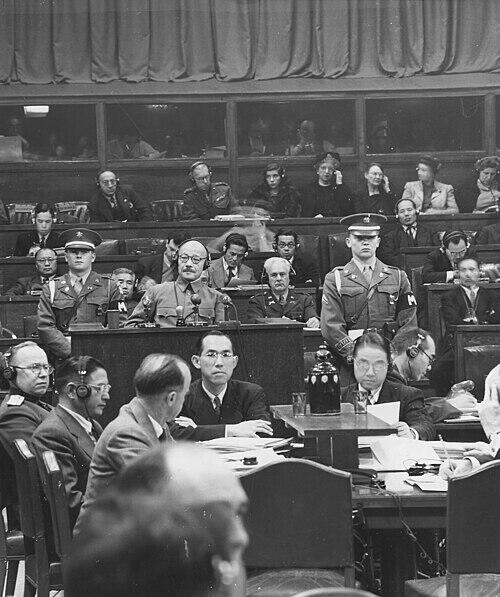
In the final days before he left Japan in 1947, Lt. j.g. Jack Mallory sat in the press gallery at the International Military Tribunal for the Far East. Thirty feet away, former Japanese Prime Minister Hideki Tojo sat in a row of defeated generals awaiting judgment for their war crimes.
Tojo's eyes drifted across the courtroom until they landed on the young American dental officer. Tojo smiled and pointed to his upper teeth before bowing toward Mallory in gratitude.
Mallory had built those dentures months earlier. Tojo had no idea what else Mallory had done to them.
For roughly three months in 1946 and 1947, the man who approved the attack on Pearl Harbor walked around Sugamo Prison with the words "Remember Pearl Harbor" drilled into his false teeth in Morse code. It was the work of a 22-year-old Navy dental prosthetics officer who saw a once-in-a-lifetime chance for some payback.
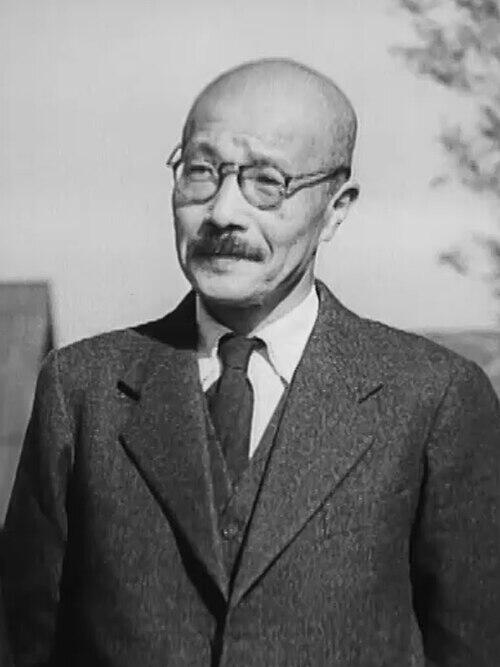
Hideki Tojo
On Sept. 11, 1945, American soldiers surrounded Tojo's home in Tokyo's Setagaya district with orders to arrest him. Rather than face capture, the former prime minister shot himself in the chest with a .32-caliber Colt revolver. A doctor had marked the spot over his heart with charcoal, but the bullet missed. In an ironic twist of history, American medics transfused him with American blood and saved his life.
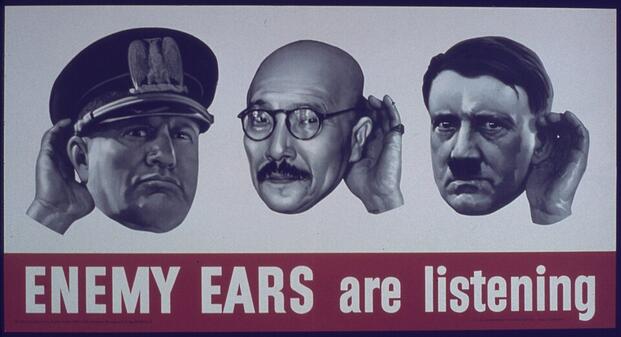
After recovering, Tojo was transferred to Sugamo Prison to await trial. He had served as Japan's prime minister from October 1941 through July 1944, and American wartime propaganda had made him the face of the enemy alongside Adolf Hitler and Benito Mussolini. For millions of Americans, Tojo was the man behind the Dec. 7, 1941, surprise attack that killed 2,403 people and pulled the United States into the deadliest conflict in human history.
By the time he reached Sugamo, his teeth were in terrible shape. All of the upper ones had been extracted or rotted away. Only seven remained on the bottom. He needed dentures to speak at his upcoming war crimes trial, and the task fell to the dental team at the nearby 361st Station Hospital in Tokyo.

Jack Mallory
E.J. "Jack" Mallory had graduated from the College of Physicians and Surgeons in San Francisco in 1945 and recently married his wife, Thelma. He volunteered for an overseas assignment in August 1946. The Navy had a surplus of dentists and was lending roughly 800 of them to the Army. Mallory ended up at the 361st Station Hospital, where he made dentures and bridges for staff and inmates at nearby Sugamo Prison.
His roommate, Lt. j.g. George Foster, an oral surgeon, was called out to examine the most infamous patient any of them would ever treat. Foster assessed the damage and brought Mallory in to handle the prosthetics. Mallory recommended a complete set of upper and lower dentures. Through a Japanese interpreter, Tojo declined. He expected to be executed and did not want to waste anyone's time. They mutually agreed on an upper plate only.
Mallory had spent years seeing wartime caricatures of Tojo. He expected a monster.
"I knew I was going to meet an evil man. It was a shock to see him," Mallory told the Chico News & Review in 2002. "He was very humble and just a meek, little guy."
Monster or not, word of Mallory's assignment spread through the hospital fast.
An Opportunity to Prank Tojo
Standard military procedure required engraving the patient's name, rank, and serial number onto dental appliances. As soon as his colleagues learned the 22-year-old was building false teeth for Tojo, they started pressuring him to swap the standard engraving for something different. There were several different suggestions for a hidden message.
Mallory was tempted by the opportunity. He also knew that writing those words in plain English would be spotted immediately and could end his career. But Mallory was an amateur ham radio operator. He knew Morse code well. So he drilled a unique phrase into the upper denture as a series of dots and dashes along the inside of the peripheral border, where the acrylic met the roof of Tojo's mouth. The Morse code message said:
Remember Pearl Harbor
"You could see it clearly when it was dried, but 99 percent of the time you couldn't tell," Mallory said.
Only Foster knew what Mallory had done. As Foster later wrote in 1988, "I figured it was my duty to carry out the assignment. But that didn't mean I couldn't have fun with it."
Tojo accepted his new upper plate without any suspicion. For the next three months, the man behind the Pearl Harbor attack continued to chew, speak and prepare for his trial with an American message hidden in his mouth. He never learned the truth.
The Secret Gets Out
Mallory kept quiet at first. But in February 1947, two new dental recruits arrived at the hospital, and he could not resist the chance to brag. He took them out to Sugamo, asked Tojo if he could examine the dentures, and showed the newcomers his work.
"We took them on an excursion to the prison to show them our masterpiece," Mallory told the Associated Press in 1995. "The only ones in on this were my dentist, roommates and myself, all sworn to secrecy."
Secrecy did not last long after that. One of the new recruits wrote a letter to his parents in Texas. They passed it to a relative, who broadcast it on a local radio station. Wire services picked it up. The tale of Tojo's teeth was making headlines around the world.
When the Armed Forces radio station in Tokyo, WVTR, ran the story, Mallory knew his career might be over. He rushed to the office of his commanding officer, Army Maj. William Hill, and confessed to what he had done.
"That's funny as hell," Mallory recalled Hill saying, "but we could get our asses kicked for doing it."
Hill gave him a direct order. Get rid of the evidence.
The Cover-Up
On the evening of Feb. 14, 1947, Mallory and Foster slipped away from a Valentine's Day party at the hospital and drove a Jeep out to Sugamo Prison. Foster knew one of the guards whose shift started at 11 p.m. They had the guard wake a bewildered Tojo and asked to borrow his dentures for emergency dental work.
Behind closed curtains, Mallory used a crude grinding stone to erase every dot and dash of the Morse code message. They returned the dentures. Tojo never understood why they had needed them in the middle of the night.
The erasure came just in time. The next morning, Stars and Stripes published the story. A furious colonel in charge of Sugamo summoned both men to his office.
"Is there any truth in this report that 'Remember Pearl Harbor' is inscribed in the dentures?" the colonel demanded.
"No, sir!" both answered. Reporters and military investigators arrived to check the dentures. With the evidence ground away, there was nothing to prove otherwise. Neither man received any formal reprimand. However, Mallory was stripped of a commendation he had recently received.
Tojo did eventually notice something was different with his dentures. A dentist who succeeded Mallory in Japan later told him the former prime minister had complained about the dentures fitting more loosely after that February night. But he never connected it to the news reports about his teeth.

After the Prank
"It wasn't anything done in anger," Mallory told the AP in 1995. "It's just that not many people had the chance to get those words into his mouth."
The International Military Tribunal found Tojo guilty of waging aggressive war and ordering atrocities. He was sentenced to death and hanged at Sugamo Prison on Dec. 23, 1948. He had been right about not needing his teeth for long.
Mallory returned to the United States in June 1947 and established a dental practice in Paradise, California, before relocating to Chico in 1955. He practiced there until the mid-1980s. Foster, who served as Mallory's partner in the scheme, died in December 1989.
"He's probably rolling around on his cloud right now, laughing his fool head off," Beverly Foster, George's widow, told reporters in 1991 when the Navy came to collect mementos of the prank for the Navy Dental Corps Historical Museum in Bethesda, Maryland. "He's thinking this is great."
The original plaster molds of Tojo's teeth and a gold bridge mold from the former prime minister's mouth were among the items sent to Bethesda. They remain on display today.
The story stayed buried for decades until 1995, when Mallory's son Paul encouraged him to write a memoir. The AP, Time, and Life all picked it up. Television crews showed up at Mallory's door for a week.
In 1969, Mallory had traveled back to Japan for a reunion with Japanese dentists. Over dinner, he told them what he had done to Tojo's teeth.
"They thought it was the funniest thing," Mallory said. "They all said, 'Why didn't you tell us this?' I said, 'Well, the timing just didn't seem right.'"
E.J. "Jack" Mallory died in 2013. His obituary mentioned a long dental career and a brief reference to a "dental prank" performed on the mastermind behind the attack on Pearl Harbor. His choice to engrave a message about Pearl Harbor in the dentures of one of the most villainous individuals in the 20th century remains one of the greatest pranks in military history.





