


On June 17, 1863, Col. Luigi Palma di Cesnola was forced to watch his men get slaughtered near the village of Aldie, Virginia. Just hours earlier, his superior officer had placed him under arrest for protesting the promotion of a less experienced officer. His saber and sidearm had been stripped away.
But the 30-year-old Italian immigrant could not stand idle as his cavalrymen charged the Confederate guns. He broke away, jumped on a horse without a weapon and rallied his men to again charge the enemy. His actions that day would earn him the Medal of Honor. He was the first Italian-American to earn the nation's highest award for valor.

An Italian Soldier
The man charging into American combat that June afternoon had already fought across two conflicts before ever setting foot in the United States.
Born in 1832 in Rivarolo Canavese near Turin, Luigi Palma di Cesnola was the second son of a count in the Kingdom of Piedmont. His older brother would inherit the family title. Luigi had to make his own way in life.
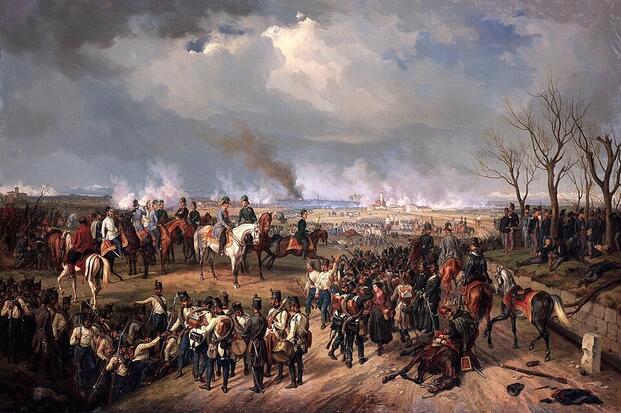
At just 16, he joined the Sardinian army as revolutions swept across Europe in 1848. On March 23, 1849, young Cesnola fought at the Battle of Novara against Austrian forces under Field Marshal Joseph Radetzky. The Piedmontese were routed. But Cesnola earned a silver medal for bravery and a promotion to second lieutenant at an age when most soldiers were still learning to march.
Cesnola continued his military education at several Piedmontese academies, including the cavalry school at Pinerolo. In 1854, the Sardinian army dismissed him. Cesnola made his way to the Crimean War, where he joined the British Army as aide-de-camp to General Enrico Fardella, a Sicilian exile who had fled the Bourbon regime after the failed 1848 revolt.
In 1858, Cesnola sailed for New York.
From Language Teacher to Cavalry Colonel
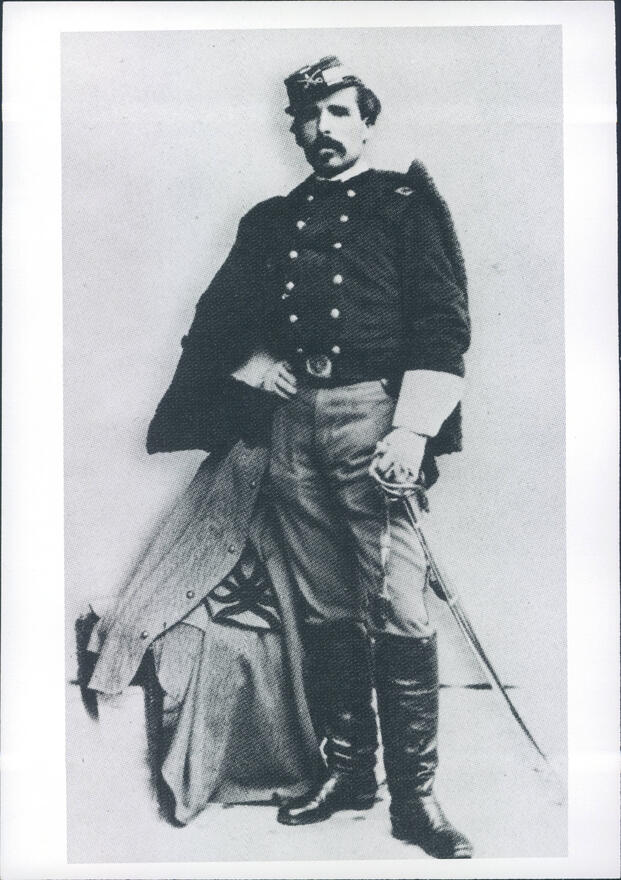
Cesnola arrived in America with the ability to speak fluent Italian and French. He quickly found work teaching both languages to wealthy New Yorkers.
One student changed his life. Mary Isabel Reid was the daughter of Commodore Samuel Chester Reid, a War of 1812 hero who had proposed the modern design of the American flag.
They married in February 1861. Her family disapproved of her marrying the Italian immigrant.
Three months later, Confederate forces opened fire on Fort Sumter. The American Civil War had begun.
Mary proposed that Cesnola use his military background to help with the war effort.
Together, they established a school to train officers for the Union Army. Within six months, more than 700 men passed through the program. Many had never ridden a horse. Cesnola turned them into trained cavalrymen.
In 1862, he received a commission as colonel of the 4th New York Volunteer Cavalry. He paid to equip the regiment with modern sabers, pistols and horses out of his own pocket. He would serve under the Americanized name of Louis P. di Cesnola.
Kelly's Ford and the New American Cavalry
The early war years were brutal for Union cavalry. Confederate horsemen under J.E.B. Stuart ran circles around their Northern counterparts. Marching infantry mocked the Union cavalry whenever they passed, yelling that a fight must be coming because the cavalry was retreating.
Cesnola brought European-style training and aggression to his regiment. He drilled the men relentlessly. He not only taught them to perform reconnaissance and harass the enemy, but to aggressively charge Confederate formations to break their will.
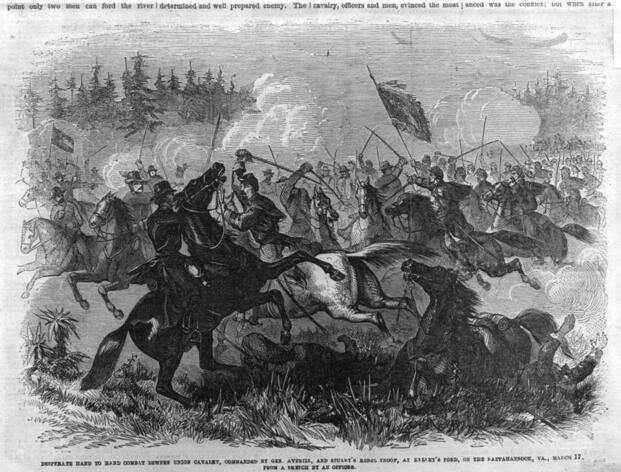
On March 17, 1863, at Kelly's Ford, the Union cavalry finally proved itself. Cesnola's 4th New York participated in what many consider the first true cavalry victory for Union forces in the Eastern Theater.
The Union troopers crossed the Rappahannock at dawn and slammed into Fitzhugh Lee's Confederate brigade. The two sides traded saber charges across the open fields until the rebels broke.
One member of the regiment summed up the significance afterward.
"It was a square, stand-up fight of over four hours duration, and the result proves that our cavalry, when well handled, is equal if not superior to the enemy."
The Union horsemen had bloodied Fitzhugh Lee's brigade. Confederate Major John Pelham, J.E.B. Stuart's brilliant artillery chief, was mortally wounded. For the first time, a Virginia cavalry unit retreated in the face of a Union charge.
Cesnola later participated in Stoneman's Raid behind enemy lines in late April 1863. He then commanded a brigade at Brandy Station in June, the largest predominantly cavalry battle of the entire war. More than 20,000 horsemen clashed over nine square miles of Virginia farmland. Cesnola led the charges against Confederate regiments at Hansbrough's Ridge, personally crossing sabers with rebel officers in close combat.
Accusations then surfaced that Cesnola had stolen Confederate property and sent it north. The Army threatened him with a dishonorable dismissal. The Judge Advocate General's office investigated and found Cesnola "was most unjustly wronged." He was reinstated to his former rank and position. But the incident angered him.
Despite his experience and seniority, Cesnola was repeatedly passed over for promotion to brigadier general in favor of American-born officers. Given the previous accusations made against him, Cesnola could no longer stay quiet. When yet another less experienced officer received a promotion, he protested to his commander and was placed under arrest.
The Battle of Aldie and Capture
The Battle of Aldie suddenly erupted as an early engagement of the Gettysburg Campaign. Stuart's cavalry was screening Robert E. Lee's infantry as it marched north through the Shenandoah Valley. Union Brigadier General Judson Kilpatrick's brigade, including the 4th New York, pushed west to find the Confederate army.
As the fighting began, the Confederate defenders held strong positions behind stone walls and on the high ground. Union cavalry charged repeatedly and was thrown back each time. One Virginian behind the stone walls recalled how fierce the combat was.
"I was so close to these men as they charged by me, that I could see the dust fly from their blue jackets as the bullets from our revolvers would strike them. I was not fifteen feet from them."
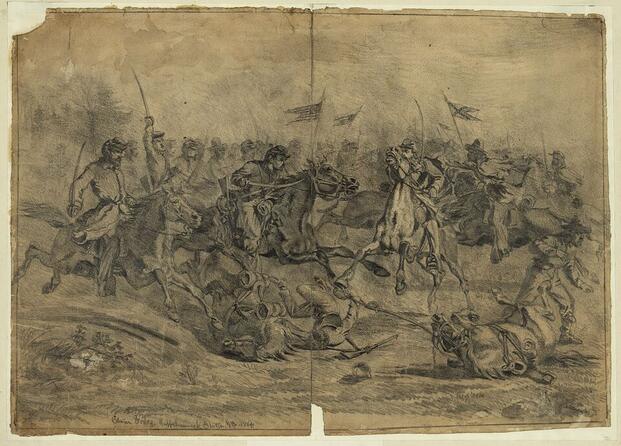
The 4th New York was repulsed. Cesnola watched the carnage unfold as his men were decimated. He was still under arrest and had been removed from command. Upon witnessing the slaughter, he lunged forward to rally his men. While unarmed, under arrest and without the authority to command, he mounted up and rallied his men in another brutal charge against the Confederate line.
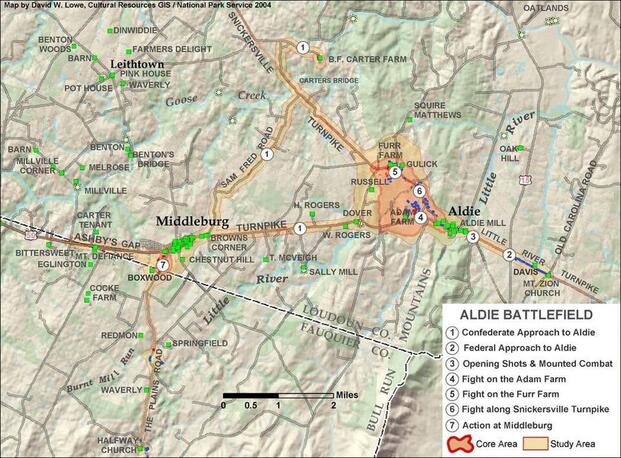
As they returned to the Union line, Cesnola was again apprehended. The regiment refused to charge again without their commander. Kilpatrick saw this and asked Major General Alfred Pleasonton, commanding the cavalry corps, to release the Italian colonel.
Pleasonton approached Cesnola.
"Colonel, you are a brave man. You are released from arrest,” Pleasonton said. “Here is my own sword. Take it and bring it back to me covered in the enemy's blood."
With the borrowed sword, Cesnola led his men in charge after charge against the rebel forces.
According to the regimental history, "the regiment arrived on the scene of conflict, and by a gallant charge, turned apparent defeat into a glorious victory for our arms, completely routing the enemy and cutting off nearly 100 men, all of whom were captured."
On the third or fifth assault, depending on the source, he failed to return to Union lines.
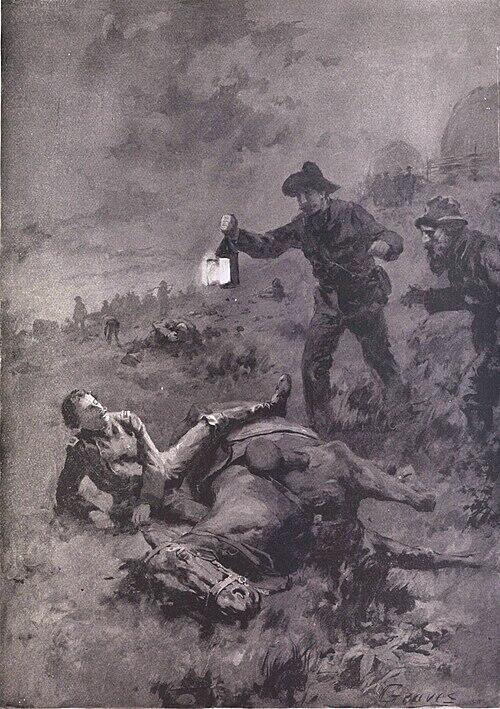
Rebel soldiers found the colonel lying in a field, pinned beneath his dead horse. He had a three-inch saber cut across the crown of his head, a deep gash in his palm, and a minié ball lodged in his upper left arm.
The troops captured him and sent him to Libby Prison in Richmond.
Ten Months in Hell
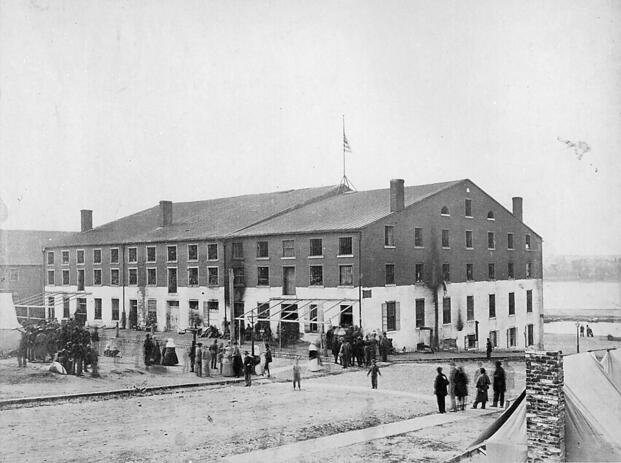
Libby Prison was the second most notorious Confederate prison after Andersonville. The former tobacco warehouse in Richmond held roughly 1,000 Union officers in cramped, disease-ridden conditions. The prisoners suffered from malnutrition, exposure through barred windows without glass and rampant illness.
Cesnola arrived at the prison on June 25, 1863, still recovering from his wounds. A fellow officer helped nurse him back to health.
The Italian colonel remained imprisoned for nearly ten months. He served as "Commissary of Distribution," traveling to Belle Isle each morning to count supply boxes and distribute their contents to his fellow prisoners.
He wrote numerous letters to his wife Mary, which still survive. Beyond requests for blankets and food, he asked for women's clothing to use as bribes for the mail censors. He also requested sheet music from Verdi's "Il Trovatore" to entertain the men.
In early 1864, Union prisoner exchange agents negotiated his release by offering a personal friend of Jefferson Davis in return. Cesnola returned to New York, reunited with Mary and met his first-born daughter for the first time, then went back to combat.
Return to Combat and Medal of Honor
Cesnola rejoined the 4th New York Cavalry and served through the Wilderness Campaign and the siege of Petersburg in 1864. His regiment was part of Philip Sheridan's cavalry force working with Ulysses Grant to defeat General Lee.
In private letters, Cesnola expressed criticism of the unnecessary loss of life at Trevilian Station and the burning of Southern homes. The cavaliere found such destruction of property and mistreatment of civilians dishonorable.
The 4th New York Cavalry participated in 47 engagements during the war and lost 114 men killed in combat while hundreds were wounded. By February 1865, only about 100 men remained fit for duty. The regiment was disbanded in late 1864. The few remaining men transferred to other regiments and continued fighting through to Appomattox.
As the war ended, Cesnola returned to his wife Mary and their two young daughters in New York. He published a short memoir, “Ten Months in Libby Prison,” in the Bulletin of the United States Sanitary Commission. The seven-page account detailed the conditions inside the notorious Confederate prison. The memoir remains one of the earliest published works of Italian-American literature and is one of the most detailed accounts of Union prisoner experiences from the war.
Cesnola's heroism at Aldie went officially unrecognized for decades. During the Civil War, the Army had no formal system for recommending soldiers for the Medal of Honor. There was also no time limit on nominations. Between 1891 and 1897, the War Department awarded more than 500 Medals of Honor for Civil War actions as veterans flooded the department with applications.
In 1897, just before new regulations imposed a one-year deadline, the Army awarded Cesnola the Medal of Honor for his actions at Aldie.
He became the first Italian-American to receive the nation's highest military honor.
A Second Career Among Ancient Treasures
Shortly after the war, Cesnola earned American citizenship and later secured an appointment as U.S. Consul to Cyprus in December of 1865.
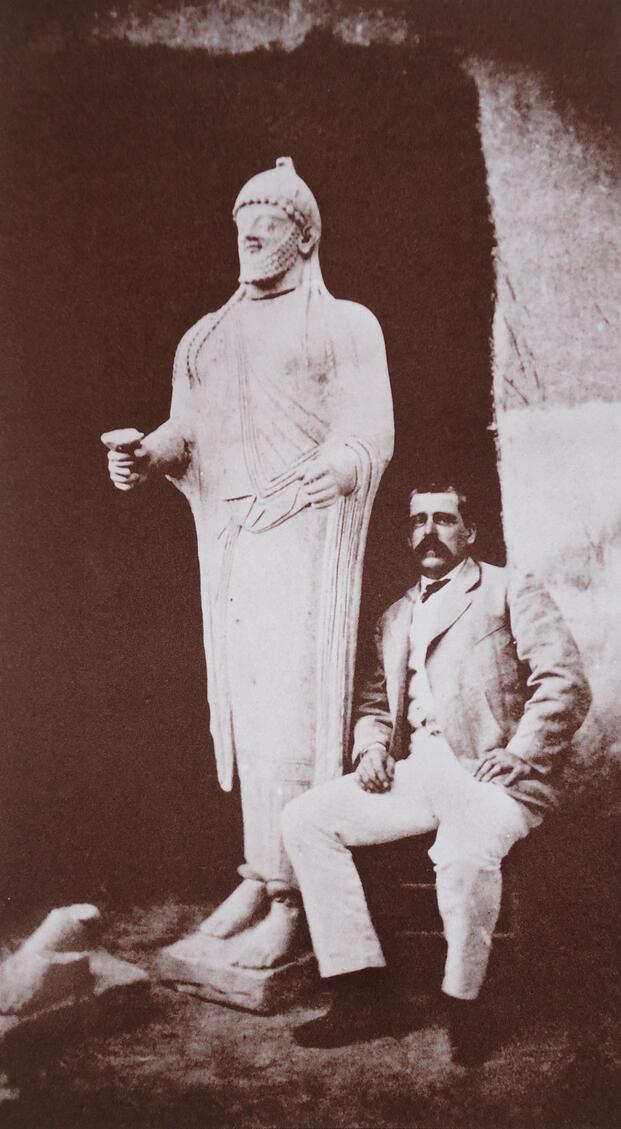
On the Mediterranean island, then under Ottoman control, Cesnola discovered a passion for archaeology. Heinrich Schliemann had found the ancient city of Troy during that time. Cesnola intended to rival him.
Over the course of 11 years, he excavated numerous sites across Cyprus and amassed roughly 35,000 antiquities spanning from 2500 B.C. to 300 A.D.
In 1872, the Metropolitan Museum of Art purchased the bulk of his collection. Cesnola accompanied his treasures to New York.
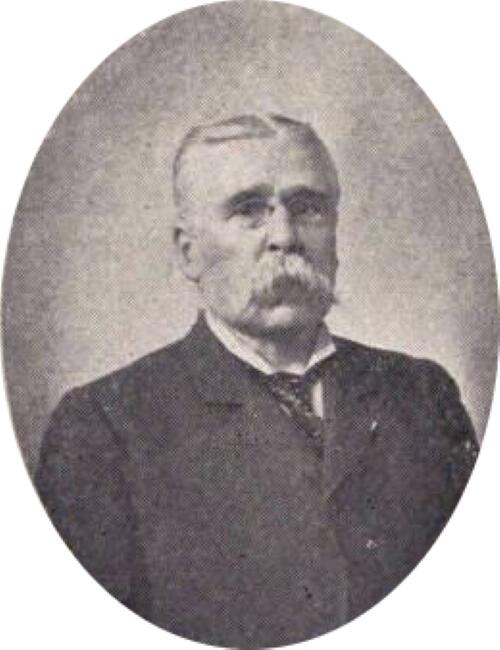
In 1879, the Medal of Honor recipient became the Metropolitan Museum's first director. He held the position until his death in 1904, overseeing the museum's move to Fifth Avenue in Central Park.
The Cesnola Collection remains the most comprehensive collection of Cypriot antiquities in the Western Hemisphere.
The Immigrant Soldier
Cesnola documented his archeological discoveries in a book “Cyprus, its Ancient Cities, Tombs and Temples' in 1877”. He later published a three-volume “Descriptive Atlas of the Cesnola Collection of Cypriote Antiquities' between 1884 and 1886”.
His accomplishments earned honors on both sides of the Atlantic. Columbia and Princeton awarded him honorary degrees. The king of Italy bestowed a special knightly order upon him. He joined numerous societies across Europe and America and became a companion of the Military Order of the Loyal Legion of the United States, an organization for Union officers and their descendants.
Cesnola died on November 20, 1904, in New York City. His funeral at St. Patrick's Cathedral drew more than 2,000 mourners. His gravestone at Kensico Cemetery lists him as a brigadier general, but the U.S. Senate never confirmed his brevet nomination.
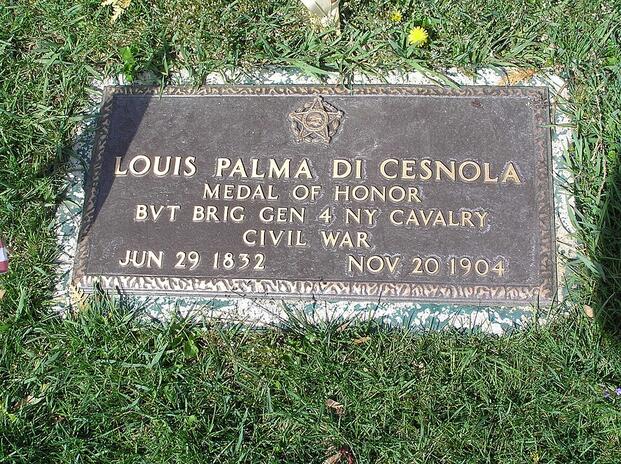
Nevertheless, the Civil War hero who had fought in three different conflicts referred to himself as “general” for the rest of his life.
The count who became a colonel, the prisoner who became a museum director, the immigrant who became a Medal of Honor recipient embodied a distinctly American story.
His Cypriot treasures still draw visitors to the Metropolitan Museum today. His Medal of Honor still inspires Italian Americans who serve. And his charge at Aldie remains one of the most dramatic moments in Civil War cavalry history.





")
