


The Belgian troopship SS Léopoldville had just slipped beneath the English Channel after being hit by a torpedo. Gerald Howard went down with the ship. The 23-year-old rifleman nearly drowned under the frigid water like hundreds of his comrades. He fought his way back to the surface.
"I was on the ship until it went down," Howard recalled decades later. "It pulled me down, and when I came up I saw a life raft. They said 'You can't get on.' I said, 'Like hell I can't.'"
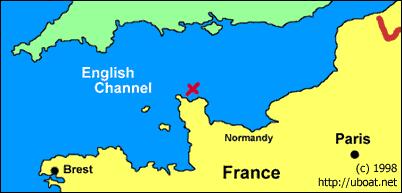
Howard woke up around midnight in a hospital in Cherbourg, France. He was among the lucky ones. On that Christmas Eve in 1944, a German U-boat torpedo killed 763 American soldiers just five miles from the French coastline. Nearly 500 bodies were never recovered from the water.
The U.S. government buried the story for decades. It was the deadliest U-boat attack on American soldiers sent to fight in World War II.

A Ship Full of Replacements
The Battle of the Bulge was tearing through American lines in Belgium. Hitler's surprise offensive had shattered the 106th Infantry Division and mauled several others. Allied commanders needed fresh troops immediately.
The 66th Infantry Division received orders to move out on Dec. 23, 1944. The "Black Panther" Division had been training in southern England for weeks. Now 2,235 soldiers from the 262nd and 264th Infantry Regiments would cross the English Channel to Cherbourg.
Boarding began at 2 a.m. on Christmas Eve. The process followed no clear or rehearsed plan. The regiments mixed together. Companies were separated. Platoons scattered randomly throughout the 478-foot Belgian liner. The fragmented loading separated the chain of command before the vessel even left the dock. Many others were placed on a different troop ship.
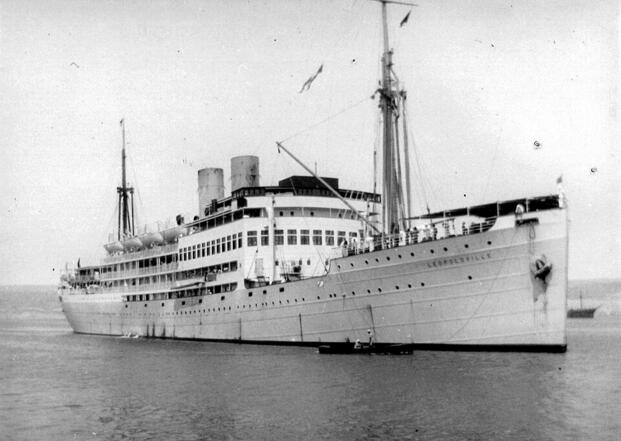
The Léopoldville was a Belgian passenger liner chartered by the British Admiralty for troop transport. She had crossed the Channel 24 times without incident. Her Belgian captain, Charles Limbor, had commanded the ship since 1942. The crew gave orders in Flemish. Few American soldiers understood a word.
A lifeboat drill was announced over the ship's loudspeakers shortly after departure. Many soldiers never heard it. Those who did simply stood at their stations while officers made spot checks. Nobody explained how to launch the lifeboats or properly wear a life jacket.
Pvt. John Pordon of San Francisco remembered the miserable voyage. Seasickness swept through the cramped holds as the ship bounced through the Channel swells.
"We were all griping about what a lousy way it was to spend Christmas," Pordon recalled. "Little did we know."
Five Miles From Shore
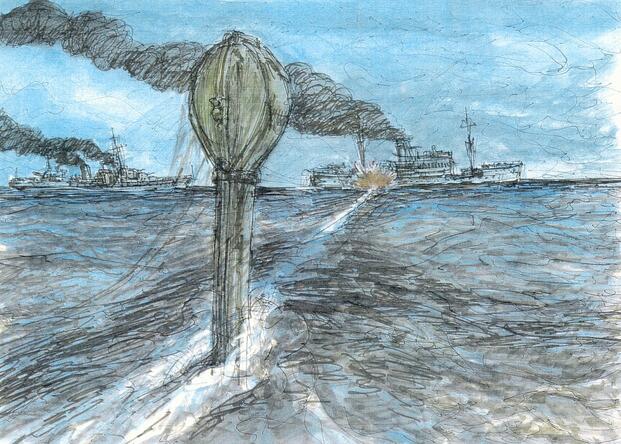
German submarine U-486 waited beneath the surface off Cherbourg. The Type VIIC boat was on her first war patrol under Oberleutnant Gerhard Meyer. She had already sunk one British vessel days earlier. Then he spotted the incoming convoy.
At 5:54 p.m., Meyer fired. The torpedo struck the Léopoldville’s starboard side and detonated in the Number Four cargo hold. Compartments E-4, F-4 and G-4 flooded instantly. The blast destroyed the access ladders. Roughly 300 men were trapped below.
"It felt like an earthquake," Pordon said.
Soldiers throughout the ship felt the impact and understood what had just happened. They moved to the deck with discipline. They lined up in formation and waited for instructions from the crew.
Those instructions never came. The ship's loudspeakers announced that a tug was coming. Captain Limbor ordered his crew to abandon ship at 6:25 p.m. The soldiers watched in disbelief as the crew climbed into the few lifeboats and rowed away. No official abandon ship order was given to the American troops.
Most of the escorting vessels, including the HMS Anthony, HMS Hotham and French Frigate Croix de Lorraine went after the submarine.
The Rescue Begins
The British destroyer HMS Brilliant served as part of the convoy's escort. Her captain, Commander John Pringle, faced a nightmare scenario. The British Royal Navy operated on different radio frequencies than American forces in Cherbourg. The two allies could not talk directly. Nearly an hour passed before Cherbourg's port authorities learned the troopship was sinking.
It was Christmas Eve. Hundreds of vessels sat in Cherbourg harbor with cold engines. Skeleton crews manned the docks. The port operated at minimal staffing.
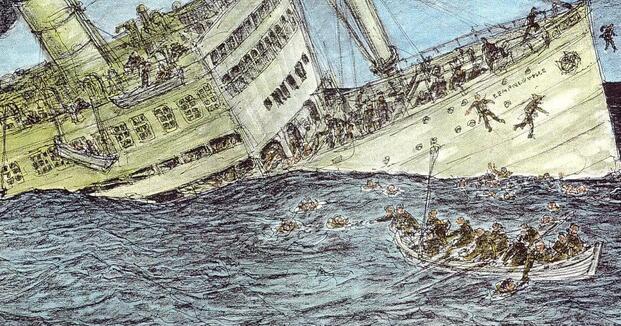
The Brilliant pulled alongside the sinking troopship at 6:25 p.m. The destroyer's deck sat roughly 40 feet below the Léopoldville’s rail. Swells of eight to twelve feet rocked both vessels. Soldiers jumped for the smaller ship.
John Waller, a 19-year-old private from Kansas, watched men attempt the leap. "I was in line to jump when the two ships collided," he recalled. "Those guys jumped from the Léopoldville, they missed. They fell in between and were killed."
British sailors hauled their hammocks onto deck to cushion the falls. Some soldiers broke their legs landing on the torpedo tubes. Many others were crushed between the hulls as the vessels slammed together in the surf.
The Brilliant took on roughly 500 men before her captain pulled away. The overloaded destroyer headed for port. Pringle later received an official reprimand for his decisions that night. More than 1,200 soldiers remained aboard the Léopoldville.
Heroes in the Darkness
Some men refused to save themselves. Capt. Hal Crain, a West Point graduate from California, gave away his own life jacket. He moved through the sinking ship searching for wounded men, pulling them to safety. He went down with the Léopoldville.
Survivor Walter Brown spent years petitioning the Army to recognize Crain’s heroic deeds. In March 1997, Crain received a posthumous Silver Star.
Pfc. William Holmes of Tennessee climbed below decks into a flooded compartment where men were trapped. He pulled one soldier out, then went back. He cleared wreckage from a stairway so others could escape. He brought out two more injured men.
As the ship began to disappear beneath the waves, Holmes stood at the rail forcing soldiers over the side until the deck beneath him went under. He went down with the ship and received a posthumous Soldier's Medal.
The 262nd Regiment's medical detachment made a collective choice. They stayed aboard to treat the wounded while others tried to escape. Only eight medics survived. Nineteen bodies were never found.
The ship began listing hard around 8 p.m. Men tumbled into the Channel wearing full field gear, winter overcoats and helmets. Nobody had taught them how to enter the water safely. Soldiers who hit the surface with chinstraps fastened had their necks broken by the force of impact.
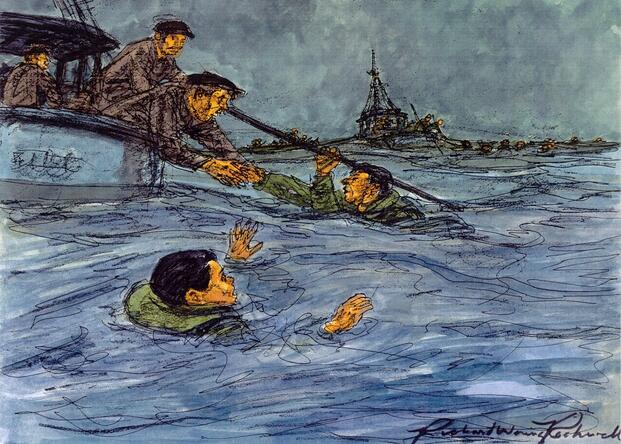
Waller walked down the side of the ship as it rolled. "I was there for 40-50 minutes in freezing, ice-cold water, before I was pulled out of the water and into a small fishing boat," he said.
The Léopoldville slipped beneath the surface at 8:40 p.m. She had stayed afloat nearly three hours after the torpedo hit. Rescue vessels from Cherbourg pulled bodies from the darkness throughout the night. Many soldiers they hauled aboard had already frozen to death.
The Cover-Up
The Army immediately ordered the survivors not to speak about the sinking. Military censors reviewed their letters home for the remainder of the war. Upon discharge, the soldiers were warned that discussing the incident with the press would cost them their veterans benefits.
The government sent the families vague notifications about the loss of their loved ones, spread out over the course of months. This was likely to prevent the public from realizing a major loss of life in a singular incident had occurred. Some relatives learned their sons were dead. Others were told only that loved ones were missing in action. Many of them never discovered what actually happened.
Chuck Mathison was two years old when his father boarded the Léopoldville. His mother received word that her husband was missing.
"It was several months before she was told he was dead," Mathison said. He did not learn his father was buried at Normandy American Cemetery until 45 years later.
The grief destroyed some families. Pfc. Garvis Dillinger of Mississippi was 18 years old. He had quit school to volunteer for service. His mother was so distraught over his death that she spent a year in a hospital recovering from the loss.
The Carlson twins from Jamestown, New York, both died that night. Carl had studied art. Clarence played the accordion and planned to continue his music studies after the war. Neither of the brothers was ever found.
A British memo from March 1946 explained the Allied reasoning for silence. It stated the story of the Léopoldville does not reflect well for the war effort. It further stated that the disclosure of the incident to the public was to be done when the timing was right.
American documents related to the sinking were declassified only in 1959. The government made no effort to inform the families of the revelation. British records remained sealed until 1996.
Breaking the Silence
Allan Andrade spent three years investigating the disaster. The retired New York City police lieutenant used his detective skills to track down survivors across the country. He published his findings in 1997.
"I used my police background to track down hundreds of people," Andrade said. "I tried to put faces on the statistics."
Survivor Vincent Codianni of Waterbury, Connecticut, worked with Andrade to push for official recognition for the Léopoldville disaster. Their efforts convinced the Army to approve a memorial at Fort Benning, Georgia. The monument was dedicated on Nov. 7, 1997.
Soldiers and survivors from the 66th Infantry Division finally began reorganizing in France two days after Christmas 1944. They spent the rest of the war containing German holdouts at Lorient and St. Nazaire. The Black Panther Division had lost 763 men before firing a shot in combat.
U-486 did not survive the war. On April 12, 1945, the British submarine HMS Tapir torpedoed the German boat off the coast of Norway. All 48 crewmen perished. It was one of the only times a submarine sank an enemy submarine in combat.
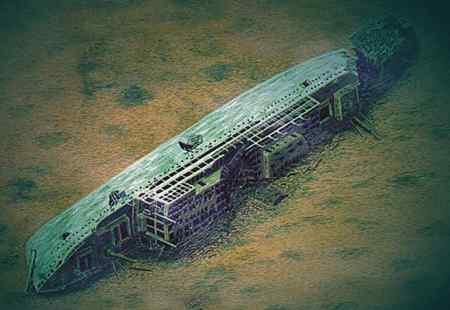
The Léopoldville remains on the Channel floor north of Cherbourg. The wreck was discovered by Clive Cussler of the National Underwater and Marine Agency in 1984. France later designated it as a war grave.
Gerald Howard, the rifleman who clawed his way onto a life raft, lived into his 80s. He never understood why the Army forced him to stay silent.
"I can understand during the war," he said. "After the war no one told me to keep a secret."
Although the event was declassified and officially recognized by the Army with several memorials on both sides of the Atlantic, most people remain unaware of the sinking of the SS Léopoldville. The 763 men of the 66th Infantry Division that were lost on Christmas Eve in 1944 represent the largest loss of American life to a German submarine during WWII.


")



")