


Under fire and against the clock, U.S. forces pushed deep into Iran to recover a downed airman before Iranian troops could close in as part of what officials described as a “no-fail” mission.
CIA Director John Ratcliffe said the rescue depended on intelligence capabilities that allowed U.S. forces to locate the airman while keeping Iranian forces off his trail.
“This was a no-fail mission,” Ratcliffe said, describing it as a race against time to find the downed aviator before Iranian forces could reach him.
The mission followed the shootdown of a U.S. F-15E Strike Eagle over Iran, which triggered an urgent search-and-rescue effort after one crew member remained missing as U.S. forces raced to locate and recover him in hostile territory. The rare operation comes as the U.S. continues strikes on Iran, warns Tehran over the Strait of Hormuz, and faces competing claims from Iranian officials who dispute aspects of the mission and allege U.S. losses.
Both crew members ejected and were isolated behind enemy lines, identified by U.S. forces as “Dude 4-4 Alpha” and “Dude 4-4 Bravo,” according to Caine.
The downed airman spent nearly 48 hours evading Iranian forces, climbing into mountainous terrain, treating his own wounds and transmitting his location using survival equipment, President Donald Trump said.

Iranian forces, including elements tied to the Islamic Revolutionary Guard Corps, moved into the area as the search intensified.
Military.com reached out for comment to the Defense Department, United States Central Command, Air Force, the White House and Iran’s mission to the United Nations.
Airman Pulled from Iran in High-Risk Rescue
Trump said the initial response included more than 20 aircraft flying low through hostile airspace, followed by a much larger operation involving more than 150 aircraft, including fighters, bombers, tankers and rescue platforms.
Caine said the first rescue began late Thursday night, when a U.S. Air Force combat search-and-rescue task force—including A-10 “Sandy” aircraft, HC-130 refueling planes and HH-60 Jolly Green II helicopters—entered Iranian airspace under heavy fire to recover the first crew member.
The A-10 “Sandy” aircraft played a critical role, flying close air support and engaging enemy forces in a gunfight to protect the downed pilot and guide rescue forces into position.
Caine said one A-10 was hit by enemy fire during the mission. Its pilot later ejected over friendly territory and was safely recovered. After recovering the first airman, U.S. forces turned to the second crew member, who had landed miles away and remained injured while evading Iranian forces.
The second rescue mission was launched Saturday after U.S. forces established contact with the injured airman, with a larger force package deployed as Iranian troops intensified their search, Caine added.
Trump said the broader operation expanded with deception tactics designed to confuse Iranian forces searching for the airman.
Aircraft came under fire during the mission, helicopters took damage while extracting personnel. Caine said one helicopter crew sustained minor injuries and is expected to be fine.
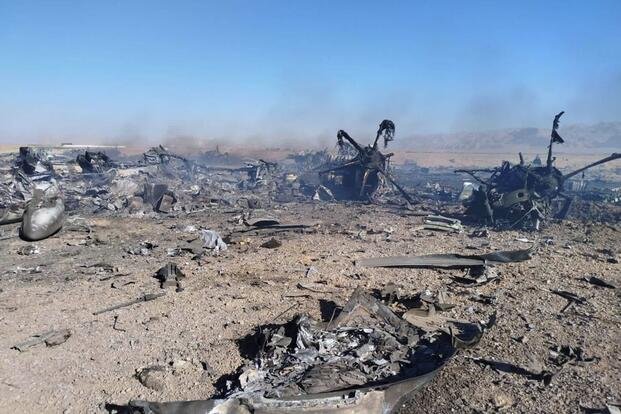
The operation also faced major logistical challenges. Aircraft became stuck in sand after landing, forcing U.S. forces to execute a contingency plan using smaller, faster aircraft while destroying disabled planes to prevent sensitive equipment from being captured.
Trump said small helicopters were rapidly assembled in the field in under 10 minutes to support the extraction. Despite the risks, U.S. forces reached the airman, engaged hostile elements and extracted him from the area.
Caine said both airmen were safely returned to friendly territory more than 50 hours after the operation began. There were no U.S. casualties.
Leak Triggered Race Against Time
Trump said the operation became significantly more dangerous after details of the downing were leaked, alerting Iranian authorities that a second airman was still missing.
“That leaker… put that man at great risk,” Trump said, warning the disclosure allowed Iranian forces and civilians to join the search.
According to Trump, Iranian authorities issued a reward for capturing the pilot, drawing large numbers of people into the search and dramatically increasing the risk of capture.
The leak also made it harder for U.S. forces to operate undetected, increasing the danger for both the airman and rescue teams.
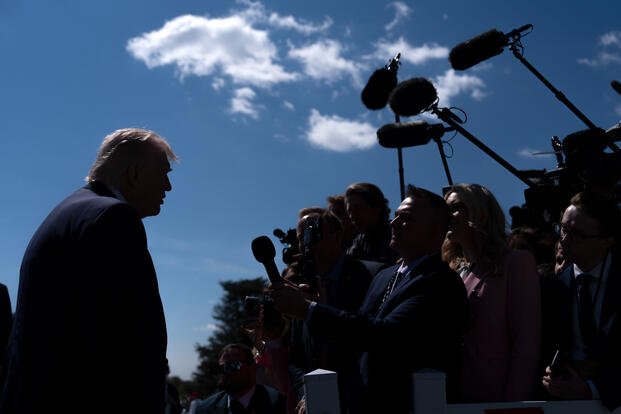
Trump later told reporters the administration is trying to identify the source of the leak, calling it a national security issue and warning there could be consequences.
Ratcliffe said the CIA deployed both human assets and advanced technical capabilities to locate the airman, comparing the effort to “finding a single grain of sand in the middle of a desert.”
He added that the agency also carried out a deception campaign to misdirect Iranian forces actively searching for the pilot, helping create the conditions for the successful rescue.
U.S. intelligence confirmed the airman was alive and concealed in mountainous terrain before rescue forces moved in, Ratcliffe said.
Iran Challenges US Account
Iranian officials have disputed key elements of the U.S. account, claiming American forces suffered losses during the rescue operation and rejecting Washington’s portrayal of the mission.
The competing claims reflect a widening information battle between Washington and Tehran as both sides seek to shape the narrative around a rare U.S. operation inside Iranian territory.
Defense Secretary Pete Hegseth said additional strikes are expected to intensify, warning that Iran “has a choice” as U.S. operations expand.
Key details remain unclear, including the identity of the airman, the full scope of the forces involved and whether additional operations are planned.





