
Brian C. McGinnis, a Marine Corps veteran and Green Party candidate for U.S. Senate in North Carolina, was forcibly removed from a Senate Armed Services Committee hearing on March 4, 2026, after interrupting the proceedings with a protest over U.S. policy in the Middle East. During the hearing, McGinnis stood and began shouting objections to what he characterized as the U.S. movement toward war with Iran in support of Israel.
Video from inside the chamber shows Capitol Police moving quickly to restrain and escort him out after he refused to stop speaking. Officers later arrested McGinnis on charges including assault on a police officer, resisting arrest, and unlawful demonstration.
Footage of the removal shows multiple officers attempting to pull McGinnis away from a doorway as he held onto the frame. During the struggle, Senator Tim Sheehy of Montana, a Republican member of the committee and former Navy SEAL, left his seat and physically assisted officers in removing McGinnis. The video shows Sheehy grabbing McGinnis as officers attempted to free his arm from the doorway and carry him out.
Capitol Police later stated that McGinnis “got his own arm stuck in a door to resist our officers and force his way back into the hearing room,” and reported that officers sustained minor injuries during the encounter. McGinnis allegedly suffered a broken arm during the struggle.
The visual record confirms that security personnel were already engaged in removing McGinnis when Sheehy intervened physically. Whether that intervention was necessary or appropriate has become a point of debate.
What McGinnis Said About Israel
McGinnis framed his protest explicitly around U.S. support for Israel and the risk of American military escalation with Iran. According to accounts from inside the hearing, he shouted statements including that Americans did not want to “fight and die for Israel.” He positioned his protest as an anti-war stand and an effort to confront lawmakers about what he views as foreign policy driven by special interests rather than the will of American voters.
His comments reflect a broader political argument that U.S. military commitments in the region are shaped in part by long-standing strategic ties with Israel. That position remains controversial across party lines. Supporters of the U.S.-Israel relationship describe it as a cornerstone of American security policy, while critics argue that congressional alignment with Israeli policy can contribute to entanglement in regional conflicts.
Inside congressional hearings, however, outbursts are treated as procedural violations regardless of viewpoint. Senate rules permit the removal of individuals who disrupt official proceedings. McGinnis’s arrest followed that pattern.

The Senator’s Role in the Removal
Senator Sheehy later described his actions as an effort to assist law enforcement and de-escalate the situation. Video evidence shows him helping officers lift and remove McGinnis after police had already restrained him. Critics argue that an elected senator inserting himself into a physical removal raises concerns, particularly because trained Capitol Police were already present and engaged.
There is no indication at this time that Sheehy faces legal scrutiny for his involvement. Capitol Police have not suggested any misconduct by the senator. The issue remains largely political rather than legal: whether a member of Congress should physically participate in ejecting a protester when security forces are already handling the situation.
Campaign Finance and AIPAC-Linked Funding
Discussion surrounding the incident has extended beyond the physical confrontation to campaign finance. The American Israel Public Affairs Committee (AIPAC) operates affiliated political action committees that contribute to federal candidates who support strong U.S.-Israel relations.
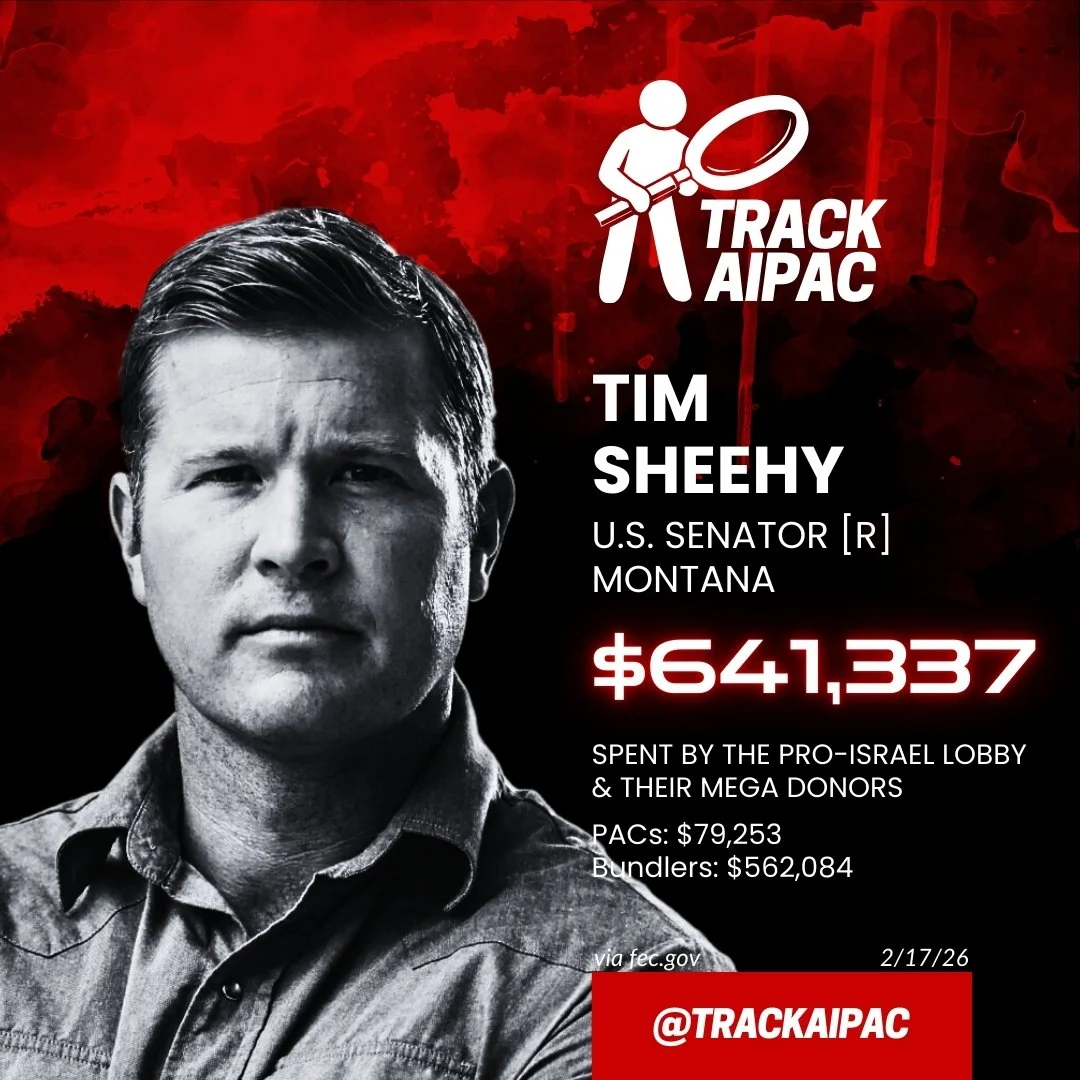
Sen. Tim Sheehy’s campaign has drawn scrutiny because of the scale of pro-Israel political support connected to his electoral effort. A pro-Israel spending tracker that says it compiles totals from federal campaign-finance records lists $641,337 in “pro-Israel lobby & mega donor” support tied to Sheehy, broken down as $79,253 from PACs and $562,084 from bundlers.
Federal Election Commission records for Sheehy’s Senate campaign are publicly accessible through the FEC candidate database.
AIPAC-affiliated super PACs have spent substantial sums supporting candidates across both parties who favor strong U.S.–Israel ties, as reflected in federal expenditure reports filed with the FEC.
A Moment Reflecting Larger Divides
The removal of Brian McGinnis from a Senate hearing highlights several overlapping tensions: the limits of protest within legislative chambers, the optics of a senator physically participating in an arrest, and the ongoing debate over U.S. support for Israel and military involvement in the Middle East.
McGinnis’s protest centered on a claim that American service members should not be drawn into war on behalf of another nation. His removal followed established security procedures for disruptive conduct in Congress. The added element of a sitting senator - who has received pro-Israel donations - participating physically in the ejection ensured the incident would receive broader attention.






")